
Top Ten: 1971
A guide to my ten favourite British albums of 1971

Top tens of certain years and genres has been my schtick for a while now. Over on the fine Lion & Unicorn, there are many of my lists for all to read. Looking back over some of them recently, I realised there is a high percentage of my favoured records recorded in 1971, a year already rightly celebrated for its high quality releases.
With that in mind, I’ve compiled and ranked the best albums released in 1971 that appear across my various L&U pieces. All of my favourite styles are here - folk, blues, prog and jazz, and hopefully, among the more familiar stuff, there may be some lesser-known gems here that you may wish to discover.
*
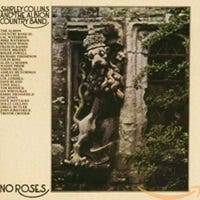
10.Shirley Collins and the Albion Country Band ‘No Roses’ (1971) From ‘Folk-Rock’
Sussex born Collins was a veteran of the British traditional folk scene; she had made an album with mercurial guitarist Davey Graham, paired with her sister Dolly making several notable albums, the duo signing to burgeoning underground label Harvest in 1968 to make two classics of the genre, Anthems in Eden and Love, Death and the Lady. In 1971 she met former Fairport Convention bassist and founder Ashley Hutchings, then with the recently formed Steeleye Span. The couple soon married, and after Hutchings had performed in the experimental play Corunna with Steeleye Span, he and Collins started work on No Roses. The record was made with an ensemble of twenty-six musicians, named The Albion Country Band, beginning a venture Hutchings would pursue (in various guises and line-ups) throughout the rest of his career. (see number five)
For the recording of No Roses, the core of the group centred around the post Sandy Denny line-up of Fairport Convention, reuniting Richard Thompson and Simon Nicol on guitars, with the two Daves, Pegg (bass) and Mattacks (drums). The result is a dense, earthy recording that is a deep representation of the power of the British folk-rock sound, best encapsulated in ‘Murder of Maria Marten’ a true story of wrongdoing in Suffolk in 1828.
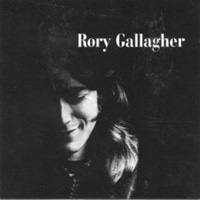
9. Rory Gallagher (1971) from ‘Blues-Rock’
Gallagher’s debut solo album builds on the work he put into his previous band, Taste, and augments it with folk-based titles such as Just the Smile. However, the Stratocaster is out for ‘Laundromat’, ‘I Fall Apart’ and the great closer ‘Can’t Believe It’s True’.
Stylistically, there is much an offer here, and points the way to the eclecticism of the 1970s. It proved a milestone in his career, and features some of his most beloved songs. There’s a whole range of emotions and talent on display, and as the first album I ever bought of his, it’s a personal favourite.
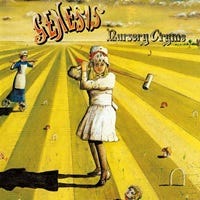
8. Genesis, Nursery Cryme (1971) from ‘Autumn’
Nursery Cryme was the band’s third album and the first to feature drummer Phil Collins and guitarist Steve Hackett. And it is here that their sounds begins to coalesce, with English choral harmony blending with powerful rhythms and, on this album, a macabre Victorian storytelling. This is evidenced on opener ‘The Musical Box’, Peter Gabriel’s vocals delivering the story of a young boy killed with a croquet mallet with relish. Elsewhere there is whimsy – acoustic vignettes such as ‘Harlequin’ and ‘For Absent Friends’ – alongside heavier ensemble pieces such as ‘Fountain of Salmacis’ and the underrated but powerful mellotron-driven ‘Seven Stones.’
The sleeve (designed and illustrated by Paul Whitehead) is wonderfully evocative, depicting characters and scenes based on ‘The Musical Box’ while the inner sleeve resembles an old photo album, with a panel for each song along with an illustrated picture. Released in November 1971, the album is something of a favourite for long-term fans and indeed conjures up a particular olde English autumnal feel. While they went on to far greater commercial success, there is a sense of innocence and introspection here that gets lost after this record. And yes, I’m a big fan of it.
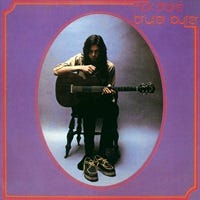
7. Nick Drake ‘Bryter Layter’ (1971) from ‘Folk-Rock’
Drake’s second album was made upon his move to London, and this is reflected in a shift from the more pastoral sounds of his debut Five Leaves Left. Producer Joe Boyd built the record around Fairport’s Thompson, Mattacks and bassist Dave Pegg, also recruiting such diverse talents as John Cale (viola on ‘Fly’); jazz pianist Chris MacGregor on ‘Poor Boy’ (alongside vocalists P.P Arnold and Doris Troy) and saxophonist Ray Warleigh on the wonderful ‘At the Chime of a City Clock.’
Bryter Layter sold only a few hundred copies at the time, but its legacy has been huge and long lasting. ‘Fly’ features in Wes Anderson’s film The Royal Tenenbaums and the beautiful ‘Northern Sky’ in Serendipity. The title track also features prominently in the 2020 novel Summer by Ali Smith. Not bad for a record that pretty much disappeared from view on release.
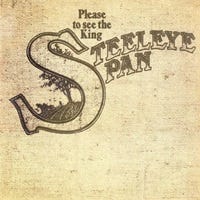
6.Steeleye Span ‘Please to See the King’ (1971) from ‘Folk-Rock’
The first three Steeleye Span albums (Hark! The Village Wait, Please to See the King and Ten Man Mop) demonstrate the band at their earthy, grittiest best. Ashley Hutchings is of course on all three; although Steeleye would go on to commercial success without him, these recordings are where the real heart of the band lies. Difficult to choose a definitive album (I’m a big fan of their debut), but this just pips it for me. Despite the lack of drums, it is more powerful for it: Hutchings’s bass packs a mighty oomph, Martin Carthy’s telecaster sound is wiry and taut and the whole recording is dense and keen-edged. There is a darkness and often medieval sound about Please to See the King with olde instruments such as dulcimer blending with electric guitar; Boys of Bedlam features an eerie, moaning crowd which is spookily beautiful.
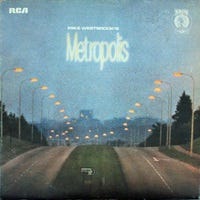
5.Mike Westbrook Orchestra, Mike Westbrook’s Metropolis (1971) from ‘British Jazz’
Quite possibly the greatest composer to come from High Wycombe, Westbrook moved to London in 1962, led several bands before forming the Mike Westbrook Concert Orchestra in 1967 and performing at the Montreux Festival in 1968. Westbrook also was involved in jazz broadcasting for the BBC and when Jazz Scene moved from Radio One to BBC Two, the station broadcast Westbrook’s Concert Band performing Metropolis. The suite, based on Westbrook’s impressions of first visiting London, was developed thanks to a bursary awarded to Westbrook from the British Arts Council, and Metropolis was recorded for RCA in 1971.
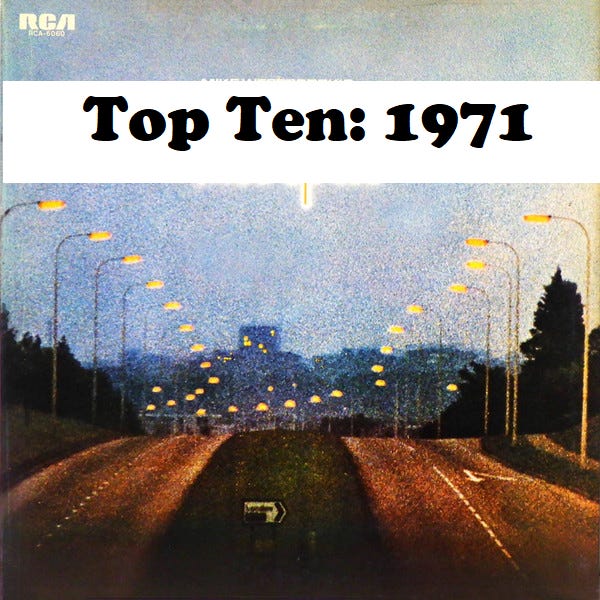
Housed in an impressive gatefold sleeve, with a cover depicting an empty road entering the capital, the album features a virtual who’s who of the then London jazz scene featuring such luminaries as saxophonists Mike Osborne, Ray Warleigh, Alan Skidmore, George Khan and John Warren, trumpeters Henry Lowther, Kenny Wheeler and Harold Beckett, drummer John Marshall and vocalist Norma Winstone.
Musically we are in progressive big-band territory here, with shifting tempos, moods and cadences, some Ellingtonian passages contrasting with a fusion-edge. The final movement is stately and a moving outro to this ambitious work.
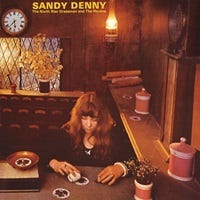
4.Sandy Denny, The North Star Grassman & the Ravens (1971) from ‘Autumn’
The period between late 1969 and the autumn of 1971 (when this album was released) had been tumultuous for Denny. After suddenly leaving Fairport Convention, she formed the ill-fated Fotheringay, who recorded one album, began an aborted second one in late 1970 and then broke up. But out of those sessions came the beginnings of her greatest work, her first solo album, the deeply melancholic and introspective North Star Grassman & the Ravens. It recruited guitarist Richard Thompson (himself in the process of leaving Fairport) and retained most of Fotheringay’s members, while Harry Robinson (orchestrator of Nick Drake’s ‘River Man’) was bought in to add string parts to the beautiful ‘Next Time Around’ (written about Denny’s former boyfriend, the American folk singer Jackson C. Frank) and ‘Wretched Wilbur.’
The album sees Denny employ metaphors of nature while writing of friends, relationships and dreams. ‘Late November’ is one of her greatest tunes, all stately piano chords, and dark, minor-key drama. Similarly, ‘John the Gun’ evokes traditional music and themes of war with a rousing chorus. The only actual traditional song here is ‘Blackwaterside’ which had been introduced to her by singer Anne Briggs, and here Denny delivers a wonderful reading. The whole record is indeed imbued with nautical imagery, from the dark tale of ‘The Sea Captain’ to the mysterious title track, which incorporates the sound of waves and the chimes of a ship’s bell.
Marcus Keef’s photography for the front cover is nothing short of masterful. The picture places Denny in a cobwebbed apothecary’s shop, measuring out dried herbs as an autumn sun flares through the window, the clock standing at twenty to six, a wonderful evocative image that absolutely reflects the music within. Denny would go on to make three fine records (particularly 1972’s follow-up Sandy) before her untimely death in 1978, but none have the sheer melancholy atmosphere and connection to nature of this one. Essential.
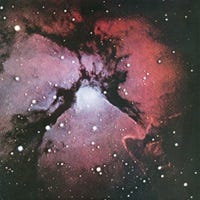
3.King Crimson, Islands (1971) from ‘Prog-Rock’
The critics often cite the band’s debut, In the Court of the Crimson King, as their masterpiece, and indeed it is a magnificent piece of work, which defined the prog territory and scared everyone senseless. However, I’ve always enjoyed the gentler, jazzier Islands. The album has (and continues to have) mixed reviews, with comparisons to the classic King Crimson line-up which followed the record always casting an unfair shadow on it. And yes, while the band with drummer Bill Bruford, John Wetton and David Cross is undoubtedly the Crims’ high point, Islands is the great ‘mid period’ Crimson record, a transitional album that owes something to the band’s original sound but also strongly points to its future. Check out the masterful instrumental ‘Sailors Tale’ for evidence (if needed.)
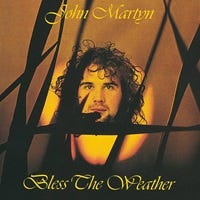
2.John Martyn ‘Bless the Weather’ (1971) from ‘Folk-Rock’
While many cite Solid Air as the classic Martyn record, I counter that argument with this 1971 rustic classic, which reflects his and wife Beverley’s move from London to Hastings. From the moment Danny Thompson’s huge double bass drops on the title track, John’s imperial phase (1971 to 1979) begins. Bless the Weather has an at-one-with-nature jazzy/folk vibe about it, particularly exemplified on tracks such as ‘Walk to the Water’, ‘Head and Heart’ and ‘Back Down the River.’
Furthermore, the trademark echoplex sound is unveiled on the swirling, trippy ‘Glistening Glyndeborne’, and the whole record is a delight. Most importantly, it turns the whole folk-rock genre on its head, with no traditional material, fiddles or four-square rhythms, instead bringing us into a shimmering stoned evocation of one man’s highly individual vision of music. No wonder Q magazine chose Bless the Weather among the dozen essential folk albums of all time in 1999, and the Guardian included it in their ‘1000 Albums to Hear Before You Die’.
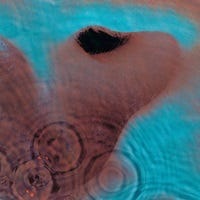
1. Pink Floyd, Meddle (1971) from ‘Prog-Rock’
‘Echoes’ was where we discovered the best music we created was when all of us got together and collaborated rather than individually coming to the studio with a song…’ – Richard Wright
‘Meddle was a clear forerunner for Dark Side of the Moon, the point where we first got our focus…’ – David Gilmour
Of course, we all know about the big one from 1973. I have no argument at all with its rightly lauded status but also have nothing to add to it. However, I am a huge advocate of Meddle (1971), the point where the Floyd really discovered themselves. Side one blasts off with the ominous bass line and space-rock boogie of ‘One of These Days’, which is followed by the underrated acoustic ‘Pillow of Winds’ and fan favourite ‘Fearless’. We can pass over ‘San Tropez’ and ‘Seamus’ (featuring the sounds of Steve Marriott’s dog – look it up) to reach side two and the band’s undoubted masterpiece, the mighty 23-minute epic ‘Echoes’.
Inspired by poet Mohammad Iqbal’s ‘Two Planets’ (a metaphor for differing aspects of human nature and desires), but weary of the band’s ‘space rock’ moniker, ‘Echoes’ sees bassist and lyricist Roger Waters finding a new direction. Rather than look above, Waters lyrics look down into the deep ocean, taking us to the subterranean, ‘deep beneath the rolling waves to labyrinths of choral caves’ to paraphrase but one line. As Waters himself commented, ‘Echoes’ ‘is the start of all that stuff about making connections with other people that became the meaning of my work from then on’.
But it’s not just the lyrical impetus that matters; the music is an incredibly moving soundscape, all four members pushing the composition on to greater heights before breaking down into the timeless middle section. The re-emergence and build up to the song’s last verse and conclusion has a momentum that is glorious, one that I never tire of, which is remarkable since I first heard the piece (in its live form on the Live at Pompeii film) in 1985.
After that I devoured their back catalogue, saw them live twice in the late 80s and once in the 90s, later attending some of Gilmour and Waters’ respective solo shows. (Gilmour memorably resurrected ‘Echoes’ for his 2006 solo shows to great effect.) That said, all these years later, I wouldn’t care if I never listened to The Wall or A Momentary Lapse of Reason again. But I’ll always come back to Meddle and specifically ‘Echoes’. Perhaps the adage that ‘some things never grow old’ is true. This is ‘prog’ that no one should be ashamed of loving. So there.